

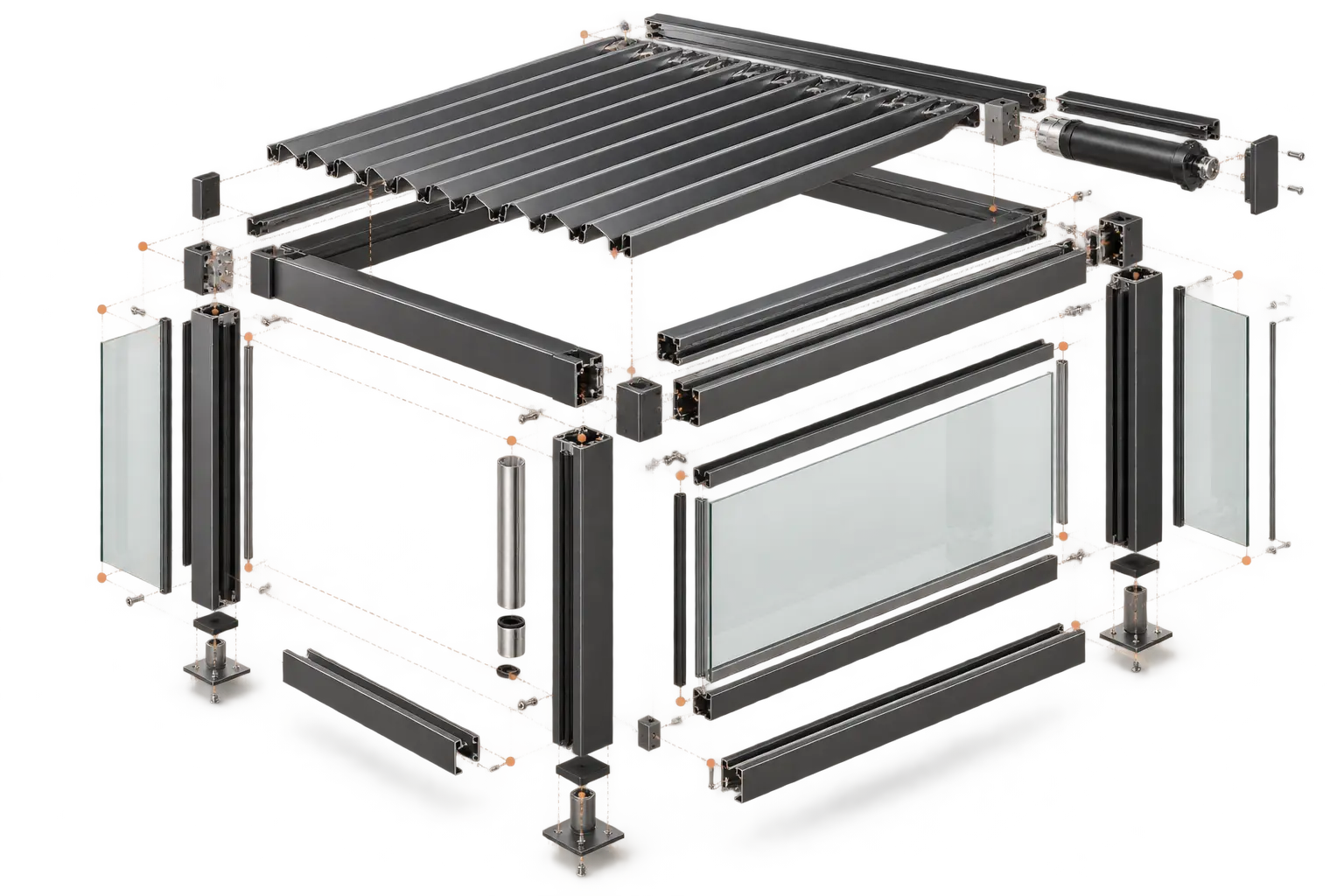
Selling made-to-fit products online is a workflow decision, not just a choice of a 3D viewer. A customer needs to understand what they can buy, select the right options and know how to proceed. Your team needs to receive an order it can interpret and review.
Start with the journey you want to offer. Then decide which product rules, pricing responsibilities and commercial steps must support it.
Separate the storefront from the product rules
The storefront explains the range and gives customers somewhere to buy. Product configuration determines which choices belong to a particular product: dimensions, finishes, accessories and permitted combinations.
These are connected responsibilities, but they are not identical. A catalog of fixed products can present predefined sizes as individual variants. A made-to-fit range may need rules that relate a customer’s dimensions to the available options and the agreed pricing approach.
Ask what happens when a customer chooses a size near the edge of your range, changes a material or combines two accessories. Does the experience guide that choice? Does your team need to approve it? The answers define the setup requirements, not the appearance of the page.
Decide which choices need your team
The goal is for most customers to see a price and place an order online. To get there, decide which choices a customer can make on their own and which ones should reach your team first.
Standard sizes, finishes and accessories inside your agreed rules can usually go straight to a price and an order. Unusual site conditions, sizes outside your range or combinations you have not approved are the exceptions: route those to a team review or a quote. If you have looked at CPQ (configure, price, quote) software, that is where the quoting vocabulary comes from; here the quote is the exception route, not the main path.
Define what your online price includes. Installation, delivery, taxes and unusual site requirements may need separate treatment. Explain the next step before the customer commits.
Keep the order connected to the choices
When a customer proceeds, your team needs more than a screenshot. Agree which dimensions, options, price assumptions and product reference must travel with the request or order.
Then agree what production needs. That might be a specification, a bill of materials, drawings or another output, depending on the product and setup scope. A rendered model is not evidence that those outputs have been generated or approved.
Use representative examples to review the handoff. Include common configurations, edge cases and combinations that should not be offered. Project-specific engineering and manufacturing approval remain separate responsibilities.
Review one complete path before expanding
Choose one product family and walk through its intended route:
- A customer finds the product and understands what can change.
- The customer chooses dimensions and options within the agreed rules.
- The customer sees the price and places the order. Requests outside the agreed rules go to your team for review instead.
- The customer knows what happens next.
- Your team receives the selected specification and agreed order information.
For each step, identify the owner and the evidence needed to approve it. Do not assume that a successful visual demonstration proves the checkout, pricing or production handoff.
This approach helps you compare options by the workflow they need to support, rather than by a feature label alone. A storefront, product rules and a review route for exceptions may all be part of the same system.
Bring these five questions to your first discussion
- Which product family should we start with?
- Which choices can a customer make without additional review?
- What must the price shown to the customer include?
- What happens when a request falls outside our standard range?
- What information must reach sales and production?
For an outdoor product example, read the guide to selling custom-size pergolas online. Explore the Molldi platform to see how it puts custom products online, or review the selling workflow before discussing your first product. Our team sets it up with you. AI does the heavy lifting.