
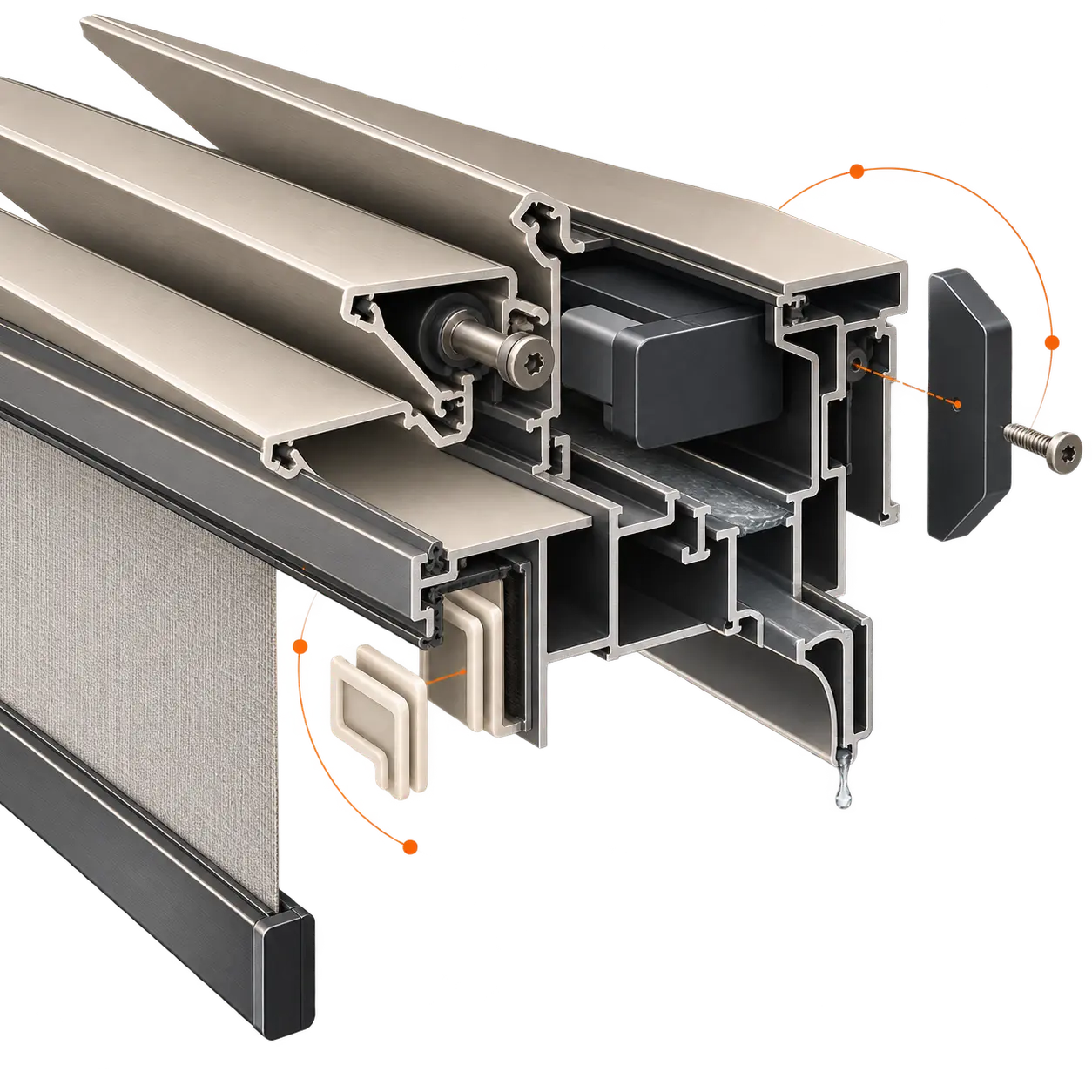
Selling a custom-size pergola online starts with defining what your factory can make. Width, depth, finishes and available options need to describe a product your team can quote and manufacture, rather than a request someone must interpret later.
Molldi connects the manufacturer’s product rules with a customer configurator, pricing and order information. The manufacturer supplies and approves the product knowledge. Customers explore the choices that system makes available.
Start with one representative product
Choose a product family with a clear set of repeatable options. Bring the models or drawings you use today, the dimensions you offer, available finishes, and an example quote and production handoff.
Separate repeatable choices from work that still needs a conversation. An unusual site condition or a project outside your normal manufacturing limits may require a team review. Decide how those exceptions should be handled during product setup.
A useful first-product brief answers four questions:
- Which dimensions and options can the customer change?
- Which combinations can your factory manufacture?
- How does each choice affect the price?
- What information does your team need when the configuration becomes an order?
Connect the choices to product rules
For a pergola, a change in width may affect more than its appearance. It may change the material requirements, permitted combinations or price. The product definition needs to capture those relationships.
Your team provides the limits and approves the configuration behavior. Discuss which inputs are suitable for online configuration and which require additional review. A configurator is a way to reuse approved product knowledge; it does not establish structural suitability or replace project-specific engineering.
See how Molldi carries a product from definition to production.
Define how configuration affects pricing
Bring your existing quoting approach into the setup discussion. Explain how dimensions, materials, finishes and accessories contribute to a quote, and identify anything that needs separate commercial treatment.
Review representative configurations together. Include common orders, the edges of the permitted range and combinations that should be unavailable. Check that the resulting price matches the rules your team has agreed.
Installation, delivery, taxes and any project-specific work should be discussed explicitly. Agree what is included in the online price and how anything outside it will be handled.
Let customers explore the product
The customer-facing experience should make the available choices understandable. Dimensions, finishes and options should stay connected to the product definition and its calculated price.
Explore Futura’s product in Molldi’s configurator to see an existing customer-facing example.
For your own product, agree how customers should proceed from a configuration to a quote or order. The right path depends on your sales process and the commercial options included in your setup.
Agree what the factory receives
Before launch, define the production information your team requires. This might include a specification, geometry, a bill of materials, drawings or manufacturing files, depending on the product and agreed scope.
Review the required outputs against sample configurations. Check that selected dimensions and options remain attached to the order, and that sales and production can understand the same specification.
The goal is a connected handoff from customer choice to the information needed to make the product.
Review one product before expanding the range
Start with a scope your team can review. Confirm the rules, sample prices, customer journey and agreed production outputs before adding more products.
Explore the Molldi platform for the connected workflow, or review plans and fees before discussing your first product.