

YOUR TEAM
Bring the product knowledge.
Share the models, options, manufacturing limits, pricing approach and production requirements. Approve how the product should behave.

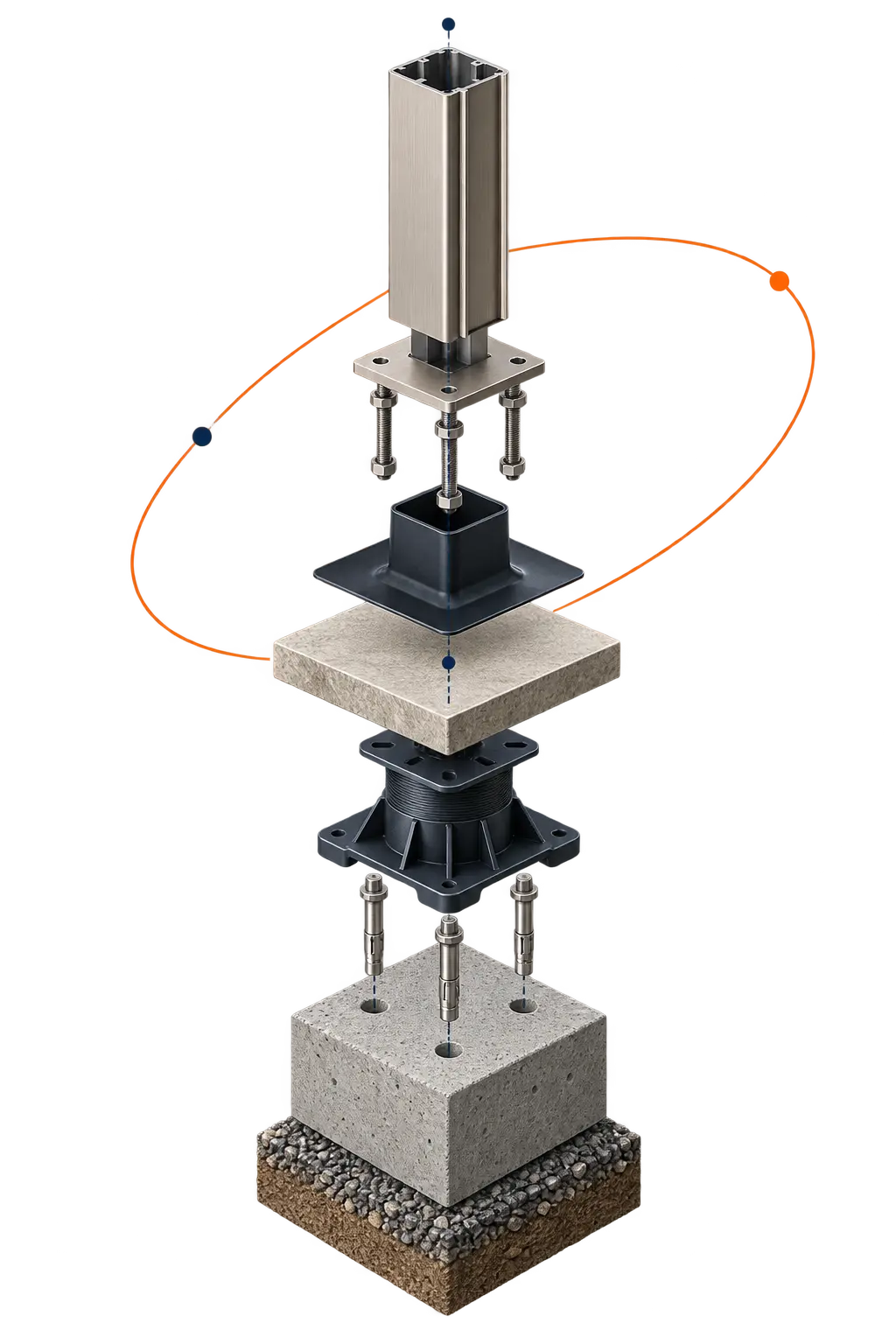
HOW IT WORKS / FROM PRODUCT TO PRODUCTION
Define your product rules. Connect customer choices to accurate orders and production-ready information.
Follow the workflowFOLLOW THE PRODUCT / A CONFIGURABLE PERGOLA
Follow a pergola from the rules your team defines to the information your factory needs. The same product knowledge connects every stage.
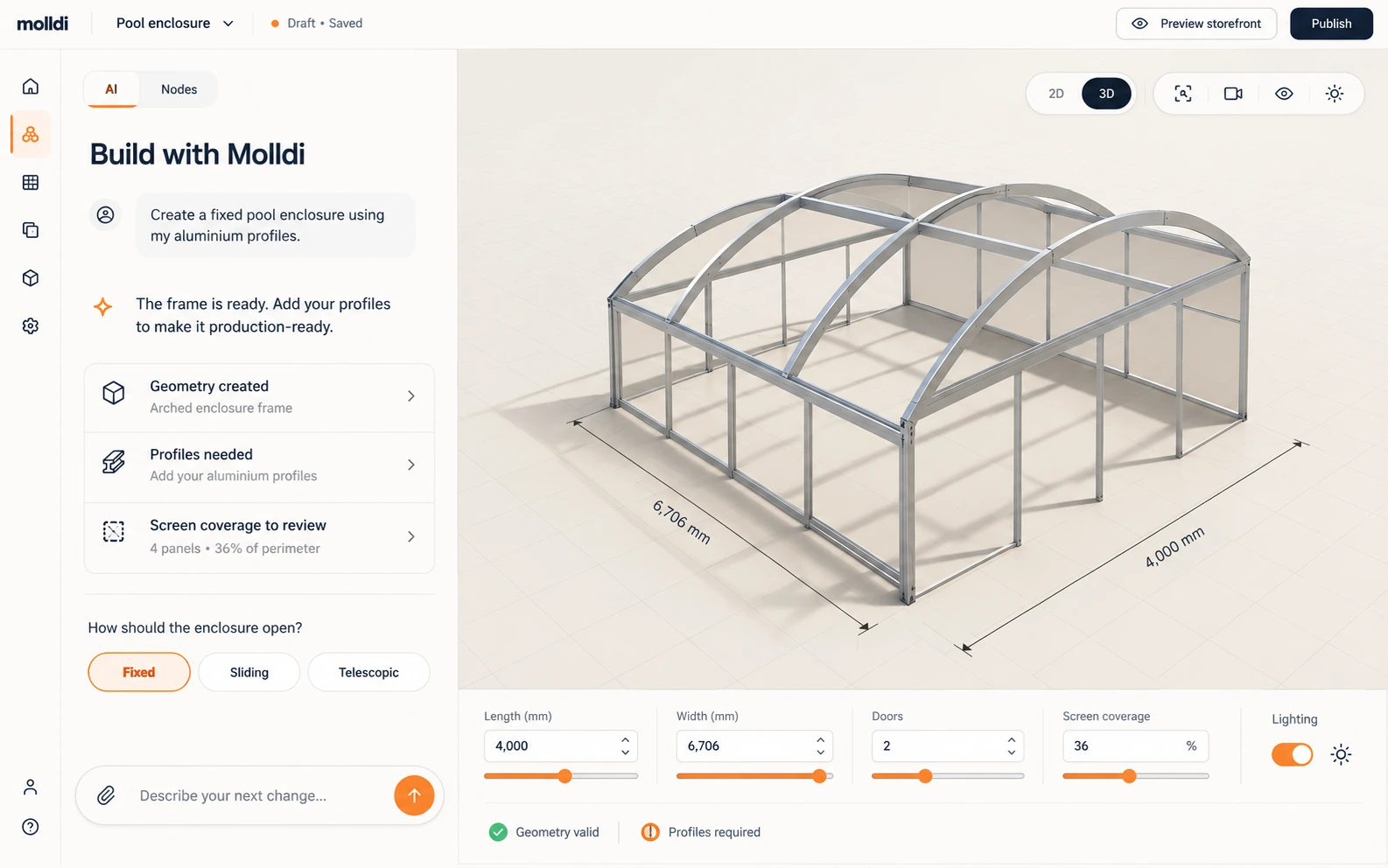
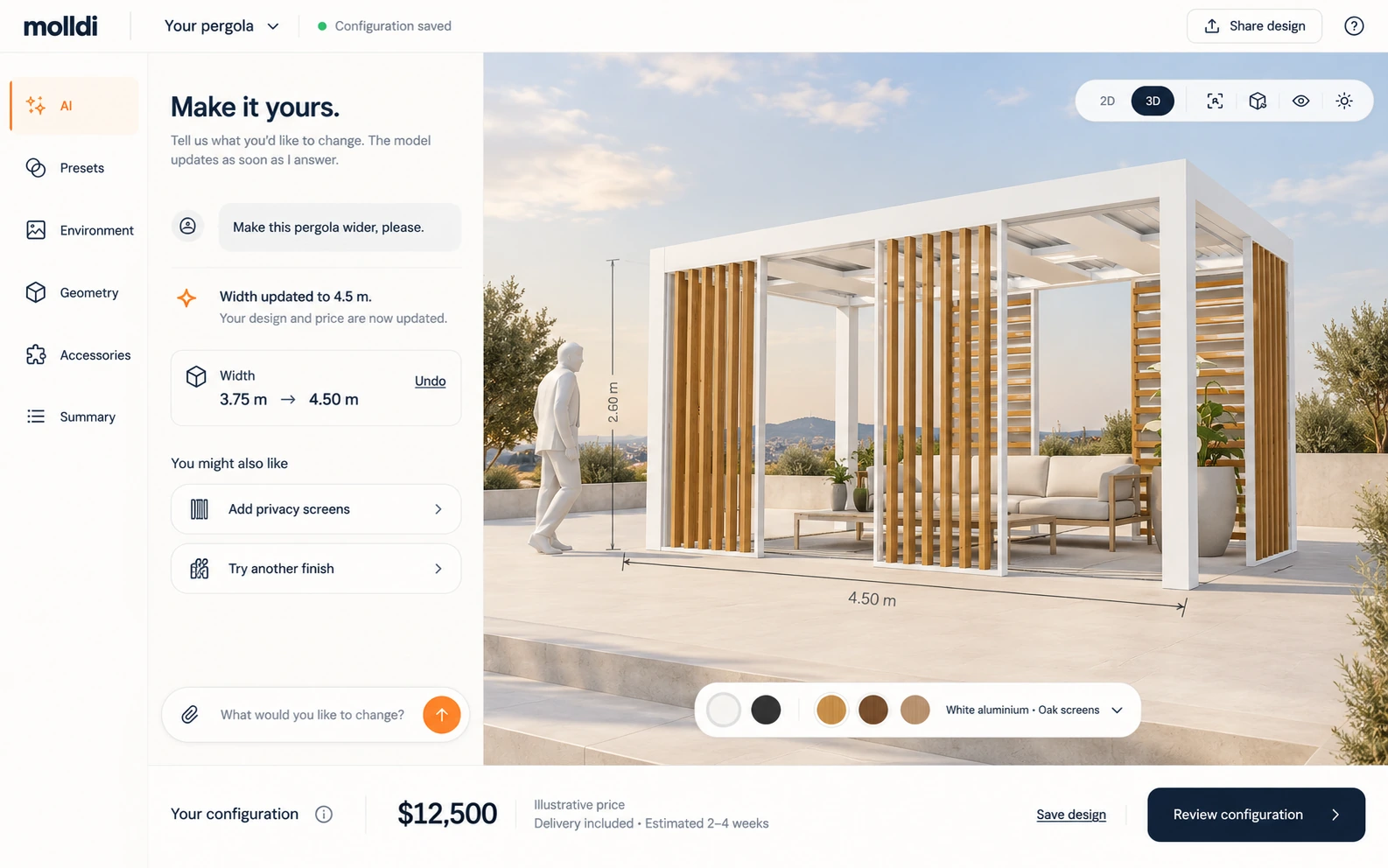
Illustrative workflow. The app screens below are design previews; they are not screenshots of the customer products linked below.
01 / DEFINE
Start with what your team already knows: the product geometry, the options you sell, the limits you manufacture within and the way you calculate a price.
WHAT MOVES TO THE NEXT STAGE
A product definition that can be reviewed with your team.
IN THE PERGOLA EXAMPLE
For a configurable pergola, width, depth and finish become product inputs. Your team defines which combinations are available.
02 / CONFIGURE
The customer explores the product through a configurator. Dimensions and options stay connected to the product rules and pricing logic defined for that system.
WHAT MOVES TO THE NEXT STAGE
A configuration with the customer’s choices and its calculated price.
IN THE PERGOLA EXAMPLE
The customer changes the pergola’s width or finish. The configuration and price follow the rules of that product.
03 / QUOTE AND ORDER
When a configuration becomes a quote or order, the product choices stay attached to it. Sales and the factory can work from the same specification.
WHAT MOVES TO THE NEXT STAGE
An order linked to the product configuration.
ILLUSTRATIVE ORDER / CONFIGURABLE PERGOLA
IN THE PERGOLA EXAMPLE
The selected width, depth and finish travel with the order, rather than arriving as a separate description to interpret.
04 / PRODUCE
The required production information is part of the product setup. Agree which outputs your factory needs, then review them against sample configurations before launch.
WHAT MOVES TO THE NEXT STAGE
The production outputs agreed for your product system.

IN THE PERGOLA EXAMPLE
The pergola configuration becomes the basis for its material requirements and agreed production documents.
EXPLORE / CUSTOMER PRODUCTS
Open a customer product in Molldi’s configurator.
IMPLEMENTATION / START WITH YOUR PRODUCT
Start with one product and agree what a successful setup must deliver. Review the rules, prices and outputs together before rollout.
YOUR TEAM
Share the models, options, manufacturing limits, pricing approach and production requirements. Approve how the product should behave.
WITH MOLLDI
Agree the configuration scope and required outputs. Discuss the setup work with our team and review representative configurations before launch.
Choose the first product, its options and the outputs your factory needs.
Connect product inputs with configuration rules, pricing and order information.
Review sample configurations, calculated prices and production outputs with your team.
Setup: $500 per product. Scope agreed before onboarding.
See plans and order fees
BEFORE YOU BEGIN
Bring a representative product, any models or drawings you use, its options and constraints, and an example of how you quote and prepare an order today. We can use that to discuss the setup scope.
Your team supplies and approves the product knowledge: dimensions, options, manufacturing constraints and pricing. Those rules form the basis of the customer configuration experience.
No. You can onboard with our team. AI-assisted onboarding is offered through early access; the team-assisted route is available from the site.
That depends on the product and the scope agreed during setup. Identify the documents and file formats your factory needs, then review sample outputs before launch.
Setup is $500 per product, with scope agreed before onboarding. A monthly plan and a fee on the value of orders processed through Molldi also apply. See the pricing page for plan details. View pricing
NEXT / BUILD WITH MOLLDI